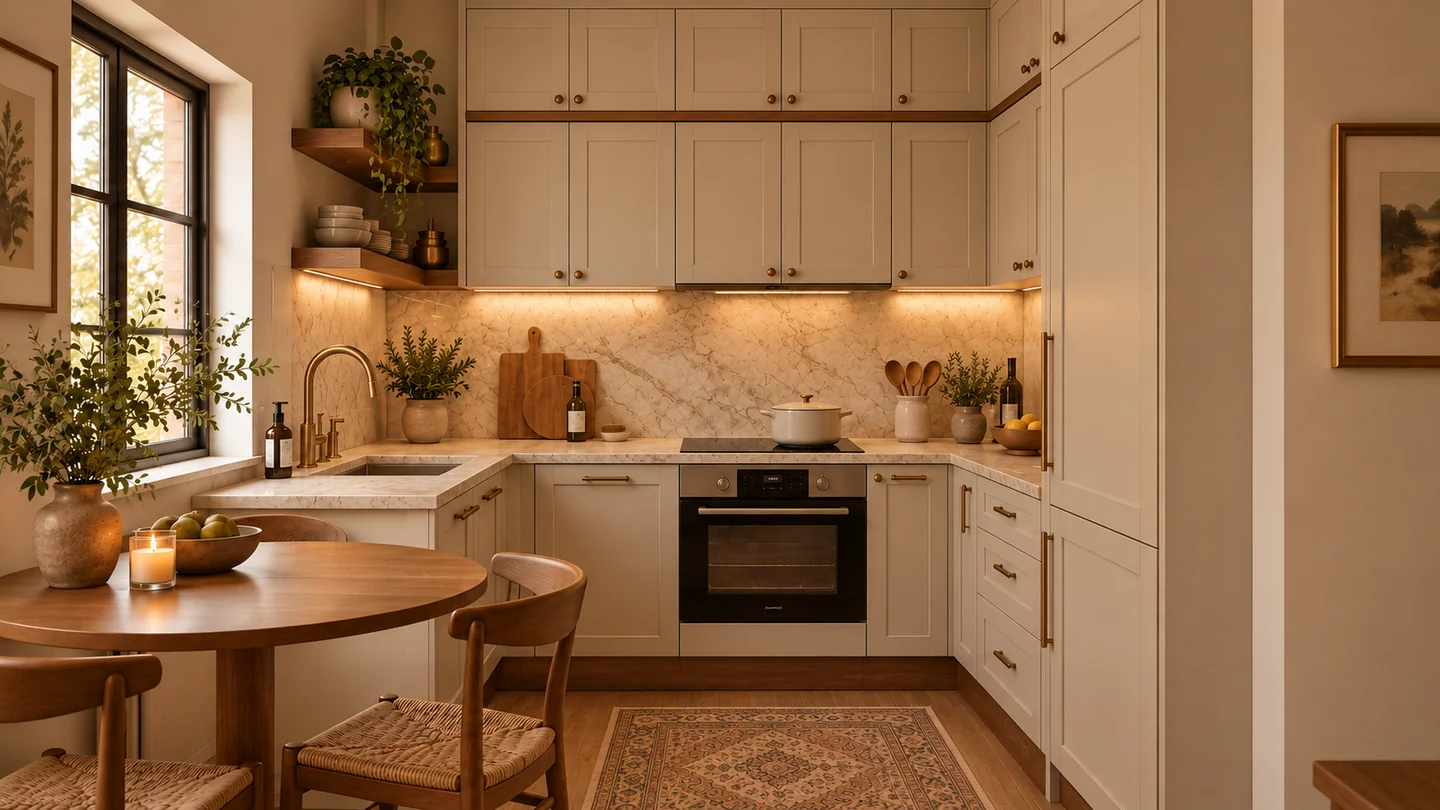
A kitchen can be small, simple and genuinely luxurious. It does not need a large floor area or showy decoration. It needs intelligent planning, materials suited to the job, accurate fitting and components that still work smoothly after years of everyday use.
To an experienced kitchen maker, quiet luxury means something practical: put more of your budget into the parts of the kitchen that do the hardest work. Those are the doors you open, the drawers you load, the surfaces you wash and the connections exposed to water. Most of this quality is invisible in a photograph of a new kitchen.
A well-made kitchen is not judged only on the day it is installed. Its quality becomes clear over the years.
Appearance still matters. Soft colors, refined proportions, carefully chosen handles and well-placed light make a room pleasant. But first ask a more important question: will the kitchen keep working well after years of use?
Build for everyday use first, then refine the appearance. A beautiful door supported by unsuitable hinges is not a sound investment.
1. Hinges: smooth closing and dependable daily use
Kitchen doors are opened and closed many times a day. Quality hinges with soft-close action prevent hard impacts and make everyday use more comfortable. But a label saying “soft close” is not enough: the fitting should come from a dependable product range and be installed accurately.
Ask whether each hinge suits the door’s weight, height and opening direction, and whether it can be adjusted properly. The number and position of the hinges matter just as much as their quality. Spend where the movement happens every day rather than paying only for an impressive door finish.
2. Drawers: invest in the runners, not just the fronts
Drawers often carry heavy cookware, dishes, utensils and food. Choose good runners so that the drawers glide smoothly and close in a controlled way. Full-extension runners, when appropriate for the design, also let you reach items stored at the back without emptying the drawer.
The installer should consider the actual contents and their weight, not merely the weight of an empty drawer. The strength of the bottom, side stability and the possibility of making later adjustments also matter. A costly-looking drawer front cannot compensate for unreliable movement.
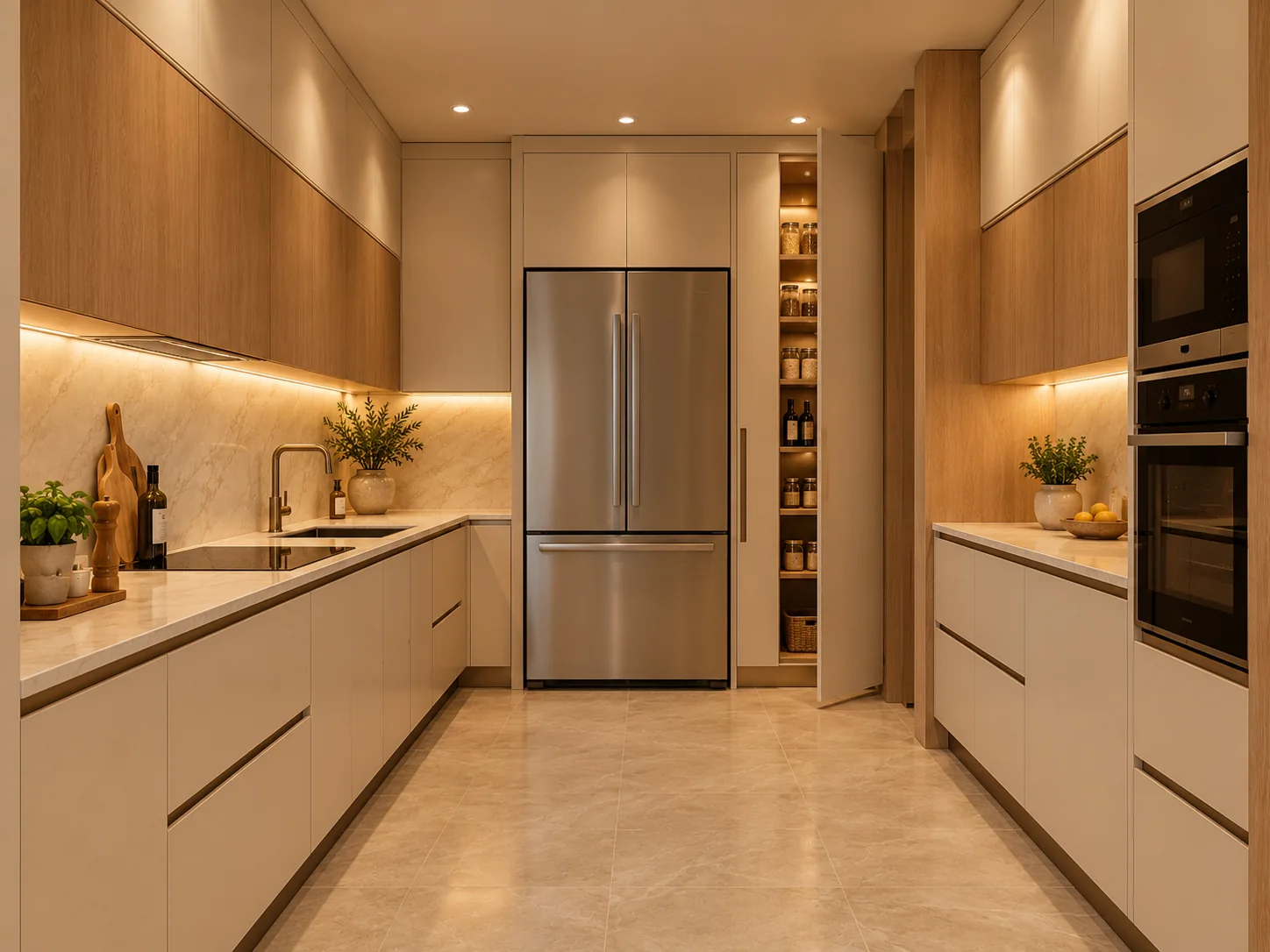
3. Pantry: a heavy-duty mechanism where it is needed
A tall pull-out pantry may carry bottles, cans, jars and other substantial loads. Here it can make sense to pay more for a sturdy mechanism with a documented load rating, secure mounting points and smooth travel. The result should be easy to use even when the shelves are stocked.
Before ordering, check the clear internal cabinet width, the space needed to pull the unit out, the shelf arrangement, access and the manufacturer’s installation instructions. Not every pull-out system suits every tall cabinet. Sometimes adjustable internal shelves are the more practical choice.
4. Worktop: look beneath the attractive surface
Worktops face moisture, cleaning, weight and temperature changes. Do not choose only from a decorative sample. Ask about the core material, the top surface, edge protection, joints and the seal around the sink. These hidden details matter when you use the kitchen daily.
A worktop with an appropriate plywood core may offer advantages over particleboard in some applications, but neither material is automatically superior. Compare the specified grade, surface finish and edge sealing. Also pay attention to accurate fitting and watertight joints. An expensive top installed carelessly may still suffer damage where water gets in.
5. Cabinet doors: quality MDF or wood with a careful finish
For a carefully made kitchen, you can consider doors in suitable MDF or solid wood with an appropriate laminate, veneer or paint finish. What you choose should match the intended look, the everyday wear it will face and the care instructions that come with the material.
Do not judge a door by its front surface alone. Inspect the edges, hinges, panel construction and protection at exposed joints. Even attractive, expensive fronts will disappoint if they are poorly fitted or let moisture enter. The complete assembly is what deserves your attention.
6. Sink and wet areas: a reliable product and a clear warranty
Choose a sink from a dependable manufacturer after checking the material, cleaning instructions and written warranty. Ask exactly what the warranty covers, how long it lasts and what exclusions apply. A long number on an advertisement is not the same as clear terms.
Good installation matters just as much as the sink itself. Check the seal around the rim, the joint with the worktop, the plumbing connections and the protection of the cabinet below. Moisture damage can begin in places you rarely look.
7. Two levels of wall cabinets, carefully proportioned
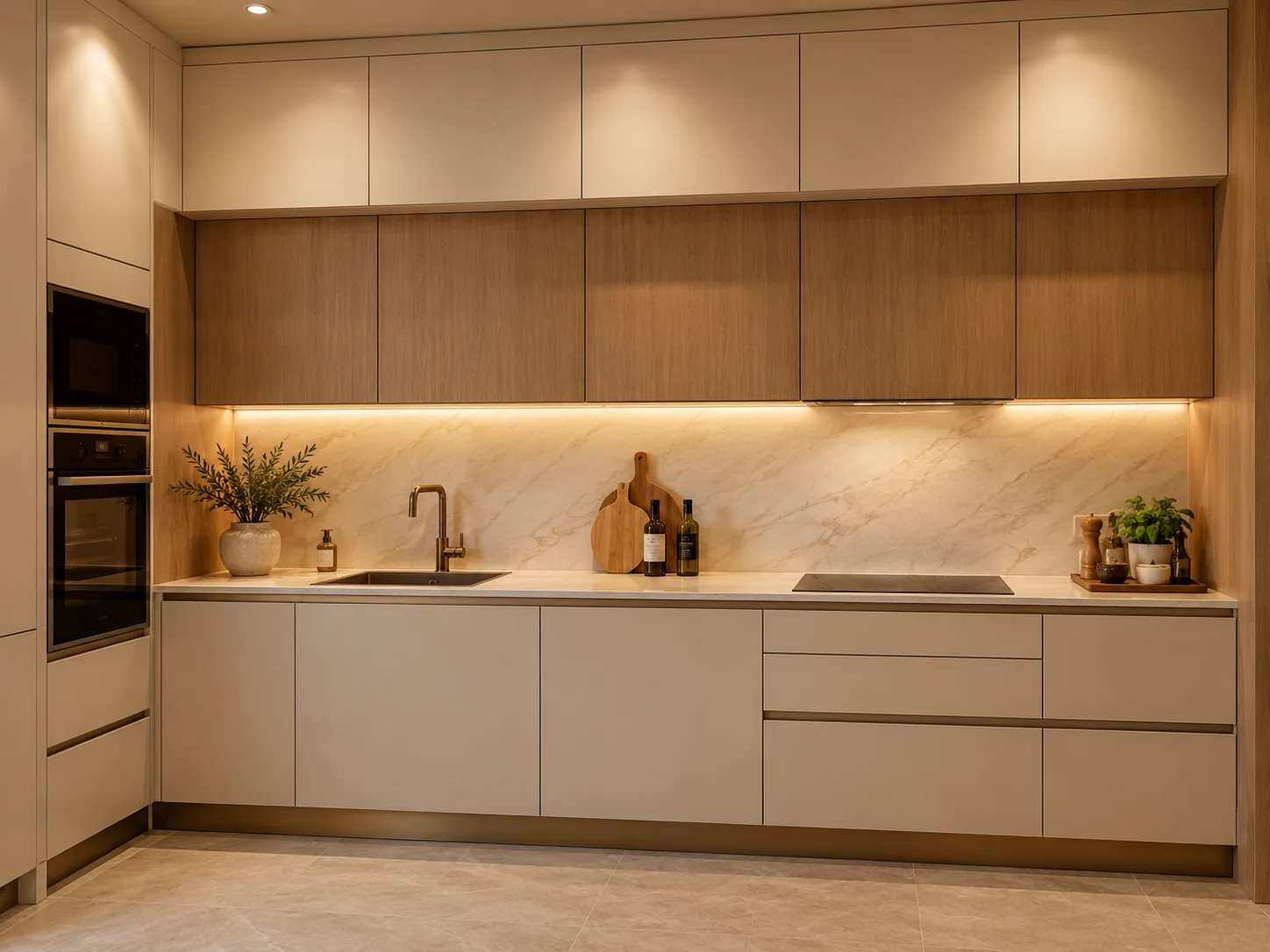
In a small European kitchen, two tiers of wall cabinets can use available height and give the room a refined appearance. Depending on ceiling height and fixing conditions, you might consider a lower tier around 72 cm and an upper tier around 60 cm, or two tiers of about 60 cm each.
A slim contrasting trim between the tiers can add character without ornate decoration. Reserve the highest storage for things used occasionally, and check how safely you can reach them. Real measurements and secure attachment to the wall must guide the final choice.
8. Make the plinth, handles and trim work together
A simple design idea is to give the plinth, or toe-kick beneath the cabinets, a different color from the doors. Cream or beige fronts can look particularly balanced with a darker wood-toned base. Repeat that accent subtly in the line separating the upper tiers.
Choose handles that relate visually to this base and trim rather than disappearing into the door color. They must also be comfortable to grip, strong enough for repeated use and easy to clean. The goal is a deliberate combination, not decorative excess.
9. Gentle colors and well-placed concealed lighting
Warm white, sand, soft beige and natural wood create a calm background that can feel luxurious without being flashy. Carefully placed under-cabinet lighting highlights the worktop and brings out the texture of the materials. One good lighting line can do more than many decorative fixtures.
Check where the light will fall, how well it is diffused, whether it causes glare and whether the electrical installation is safe. Kitchen task lighting should help you prepare meals comfortably, not simply make the room look attractive in photographs.
10. See a plan before paying for the build
Before choosing the final color or ordering cabinets, draw the layout around the real measurements of the room. Mark doorways, windows, utility connections, appliances, traffic routes and the opening space each door or drawer needs. A seemingly small interference can become an everyday irritation.
Design Pro can help you prepare and review a kitchen arrangement in 2D and 3D before discussing the details with a maker. A digital plan makes it easier to ask specific questions; it does not replace on-site measurement and professional checking. Record which fittings, materials and moisture protections are intended as well as the cabinet positions.
11. Ask to see kitchens made five or more years ago
When speaking with a craftsperson, ask whether you can see one or two earlier kitchens they built, ideally at least five years old. This may not always be possible, and any visit must be agreed with the owners. Photographs of older installations or references from previous clients may also help.
A photograph taken on installation day shows how a kitchen looked when new. Older work may reveal how the doors, runners, joints and surfaces have coped with everyday life. If dealing with a company, request written warranty terms: duration, coverage, exclusions and who handles support. Distinguish workmanship warranties from product warranties.
12. Where is your extra budget best spent?
If you cannot afford the most expensive option in every category, choose a balanced layout and spend extra on the components you will use most. Quality hinges, drawer runners and pantry systems should come before expensive ornament. Protect the worktop joints and the wet areas before paying for cosmetic details.
Next, choose durable fronts, pleasant handles, a restrained color combination and good task lighting. Finally, verify leveling, fastening, door gaps and adjustments when the kitchen is fitted. Good materials only deliver their value when the installation is equally careful.
Hinges, drawer runners and pantry mechanisms with clear specifications.
Worktop joints, sealing, durable edges and accurate installation.
Colors, contrasting plinth, handles, trims and lighting that work together.
Design Pro — plan first, choose with confidence
Arrange your kitchen in 2D and 3D. Review proportions, cabinet positions and storage ideas before discussing the actual construction with a professional.
Start from the room’s measurements and furniture positions.
Check the composition and proportions in the space.
Explore different cabinet arrangements.
Use the plan to ask specific practical questions.
Frequently asked questions
What does quiet luxury mean in a kitchen?
Quality of materials and function without a showy appearance. Put the budget into dependable mechanisms, accurate building and a calm, balanced finish.
Is it worth paying more for hinges and drawers?
Often, because they are used constantly. Pick fittings suited to the real dimensions, the expected loads and the need for future adjustment.
Are MDF and plywood always better than particleboard?
Not in every application. Ask for the actual product specifications, moisture protection, edges, finishing and installation quality.
Why use two tiers of upper cabinets?
They can make use of height and create an elegant line of cabinets with contrasting trim, provided reach and secure fixing have been checked.
What should I ask a kitchen maker before paying a deposit?
A detailed quotation, a measured plan, named materials and mechanisms and written warranty terms. If possible, see examples of work at least five years old.
How can I see the layout before it is built?
Start with correct room measurements and a 2D/3D draft in Design Pro. Confirm final measurements and build decisions with the responsible professional.
Your feedback helps us improve
Was this guide useful?